Dense downstate commercial real estate
Properties in dense New York City-area commercial corridors are reviewed for roof access, shared-structure considerations, and shading from adjacent buildings.
Loading page content
New York Commercial Solar
New York's commercial landscape spans dense New York City-area commercial real estate, upstate manufacturing and logistics operations, and agricultural land, each with very different solar planning considerations.
Based in Panama City Beach, Florida. Serving residential solar customers throughout the Southeast and commercial solar customers nationwide.
Spence Solar and Construction is based in Panama City Beach, Florida, and evaluates commercial solar and storage projects for New York businesses as part of a nationwide commercial project review, subject to project requirements, financing, and installer coverage.
Commercial solar projects can be evaluated in all 50 U.S. states, subject to project requirements, installer coverage, financing, utility rules, and local regulations.
New York's commercial properties range from dense downstate commercial buildings to upstate manufacturing, logistics, and agricultural operations. Building density, roof access, and seasonal production variation all factor into the review for each property.
A useful commercial review usually starts with usage data, rate structure, and site conditions—not a one-size estimate.
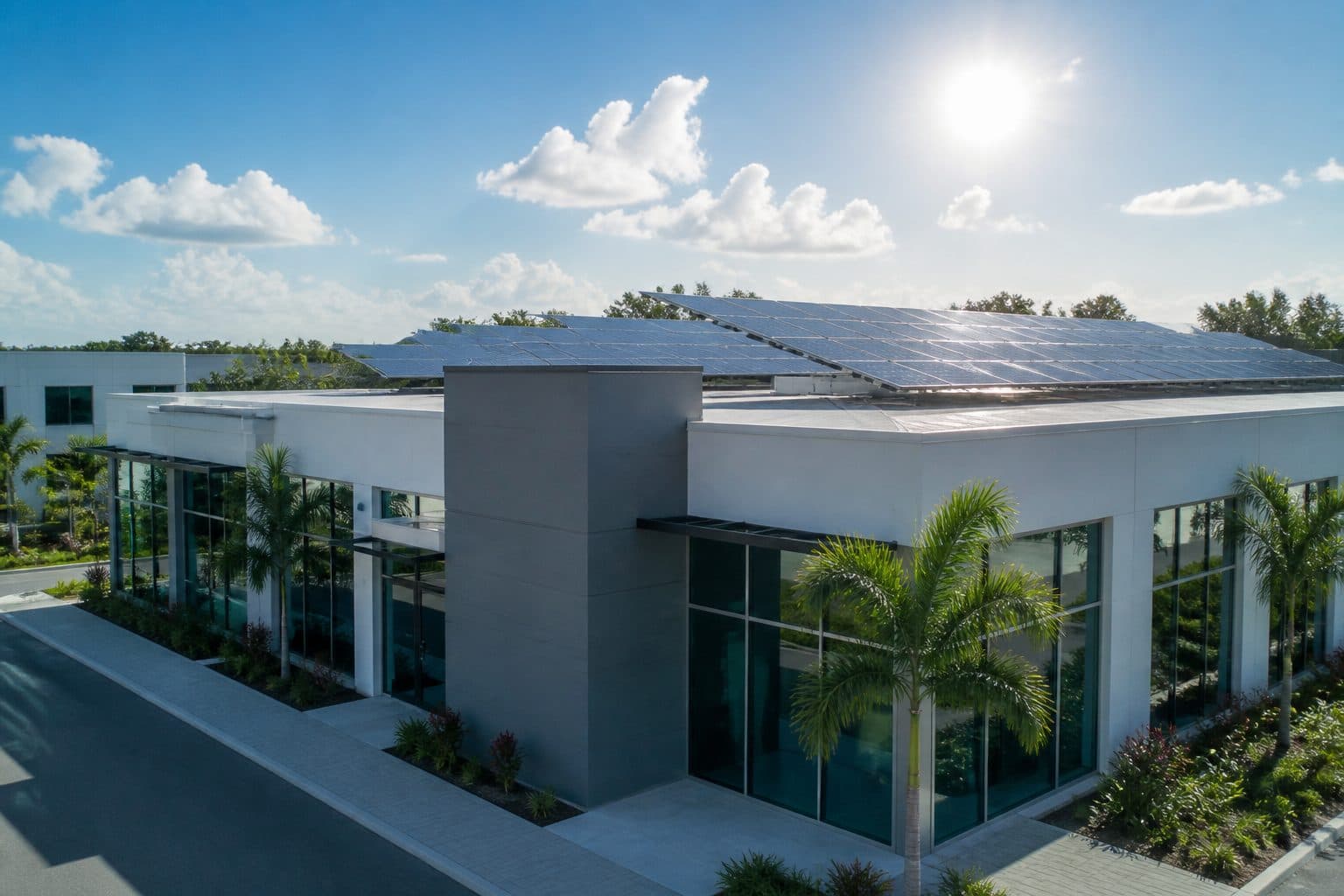
Properties in dense New York City-area commercial corridors are reviewed for roof access, shared-structure considerations, and shading from adjacent buildings.
Upstate New York manufacturing and logistics facilities often have high, consistent load profiles reviewed for demand-charge and storage potential.
New York's agricultural producers, particularly upstate, may be eligible for USDA REAP funding in addition to federal tax incentives, subject to eligibility review.
New York's winter climate reduces seasonal solar production due to shorter days and potential snow cover; realistic full-year production estimates are part of every project review.
Roof structural capacity for snow load is reviewed as part of the rooftop solar assessment for New York properties, particularly upstate.
Rooftop arrays and parking-area solar carports may both be considered depending on roof condition, land availability, and site layout.
Some New York businesses explore storage for demand-charge management or operational backup power, depending on load profile and goals.
Federal programs may apply depending on project facts and current law. We do not invent state-specific incentives here.
Incentive amounts, depreciation treatment, grant eligibility, transferability, elective pay, tax-credit availability, and program timelines depend on current rules, project details, and the customer’s individual circumstances. Customers should review tax matters with a qualified tax professional and grant requirements with an experienced grant professional.
Review the site's solar incentive education and official resources.
Electric bill upload
Recent bills help us review usage patterns, demand charges, and whether a deeper commercial analysis makes sense for your New York property. Final feasibility still depends on utility rules, site conditions, financing, and installer coverage.
Federal, state, local, utility, grant, financing, and product availability varies by project location within New York and by utility territory. A New York project will be evaluated under the rules and programs applicable to its specific location. This is not tax, legal, engineering, or financial advice.
Browse the nationwide commercial directory for other states.
FAQs
Yes. We evaluate commercial solar and storage projects for New York businesses, both downstate and upstate, as part of our nationwide commercial project review.
Dense commercial corridors bring roof-access, shared-structure, and shading considerations that are reviewed individually for each property, alongside applicable local permitting requirements.
Eligible agricultural producers and rural small businesses may apply for competitive USDA REAP funding. Eligibility depends on business type, location, and current program rules, and funding is not guaranteed.
Helpful details include business type, property location, recent utility bills, whether demand charges apply, and basic project goals. You can upload bills through our online form to begin the process.
New York commercial
Share business details, preferred contact method, and bill files when available.