Loading page content
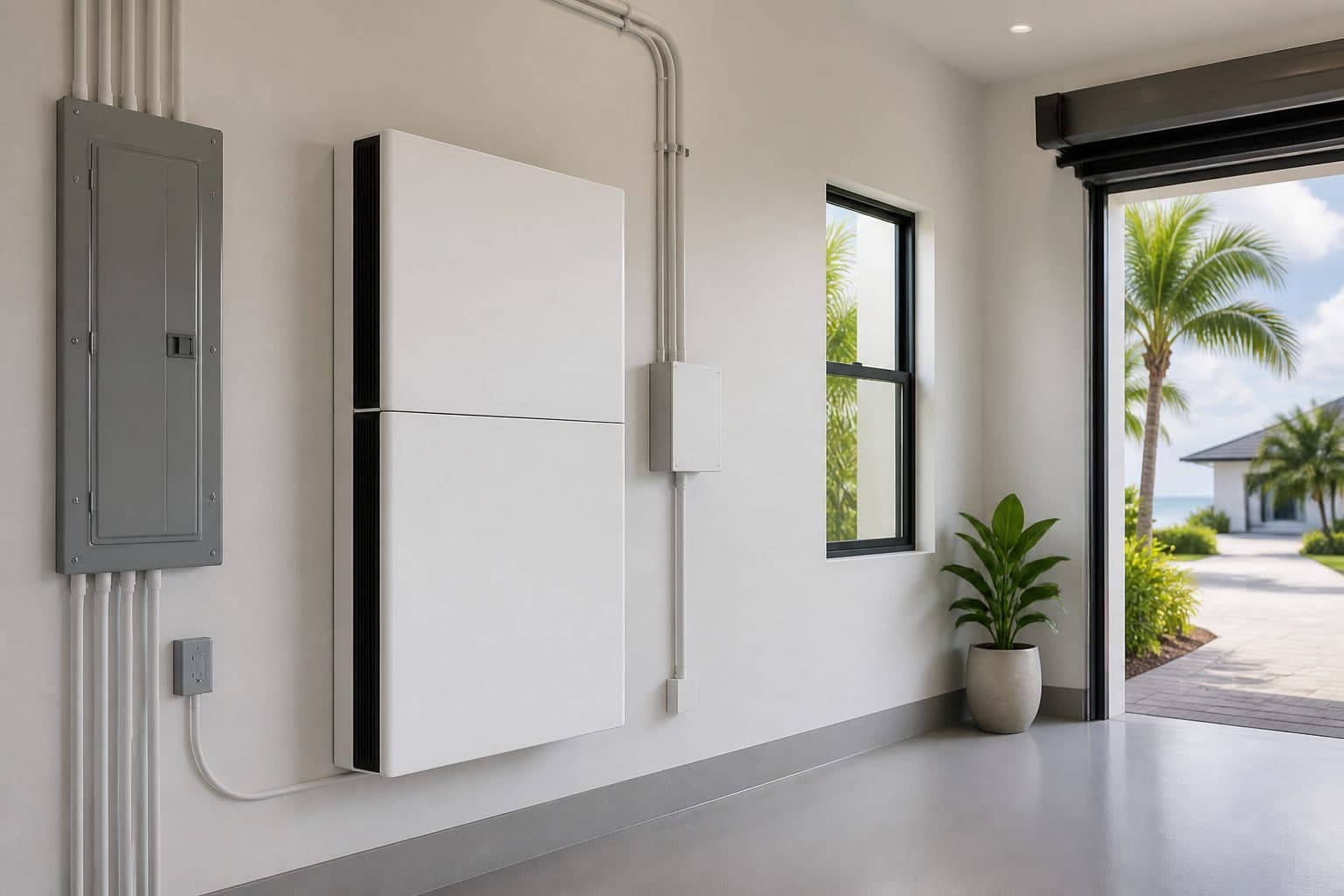
Battery backup
Battery backup for homes and businesses
Explore storage for storm outages, critical loads, business continuity, and energy-management goals—with clear limits and no promised backup duration.
Based in Panama City Beach, Florida. Serving residential solar customers throughout the Southeast and commercial solar customers nationwide.
- Whole-home or partial-home backup concepts
- Critical-load planning for storms and outages
- Commercial continuity and peak-demand discussions
- Runtime depends on capacity, loads, solar, weather, and usage
Use cases
Residential and commercial storage conversations
Battery projects are designed around power output, storage capacity, electrical configuration, and your priorities—not a one-size promise.
Whole-home backup
Evaluate whether available power output and capacity can support broader household loads during an outage.
Partial-home backup
Protect prioritized circuits when a full-home design is not practical or cost-aligned.
Critical-load planning
Identify refrigeration, medical equipment, communications, lighting, and other must-keep circuits.
Hurricane and storm outages
Plan for Gulf Coast weather realities with realistic expectations—not promised runtime.
Medical and refrigeration loads
Discuss loads that matter most for health, food safety, and household continuity.
Business continuity
Explore commercial backup for critical operations, POS systems, refrigeration, or security loads.
Peak-demand management
Some businesses review storage as part of a broader energy-management strategy.
Demand-charge strategies
Discuss potential demand-charge approaches where rate structures and load profiles may support them.
Solar charging
Pair storage with solar so excess daytime production may help recharge batteries when designed to do so.
Self-consumption
Review how stored energy may support on-site use depending on utility rules and system settings.
Generator integration
Consider whether generator pairing is relevant for extended outages and how systems may coordinate.
Power versus capacity
Power (kW) is how much a battery can deliver at once. Capacity (kWh) is how much energy it can store.
Gulf Coast readiness
Storm outages call for realistic planning
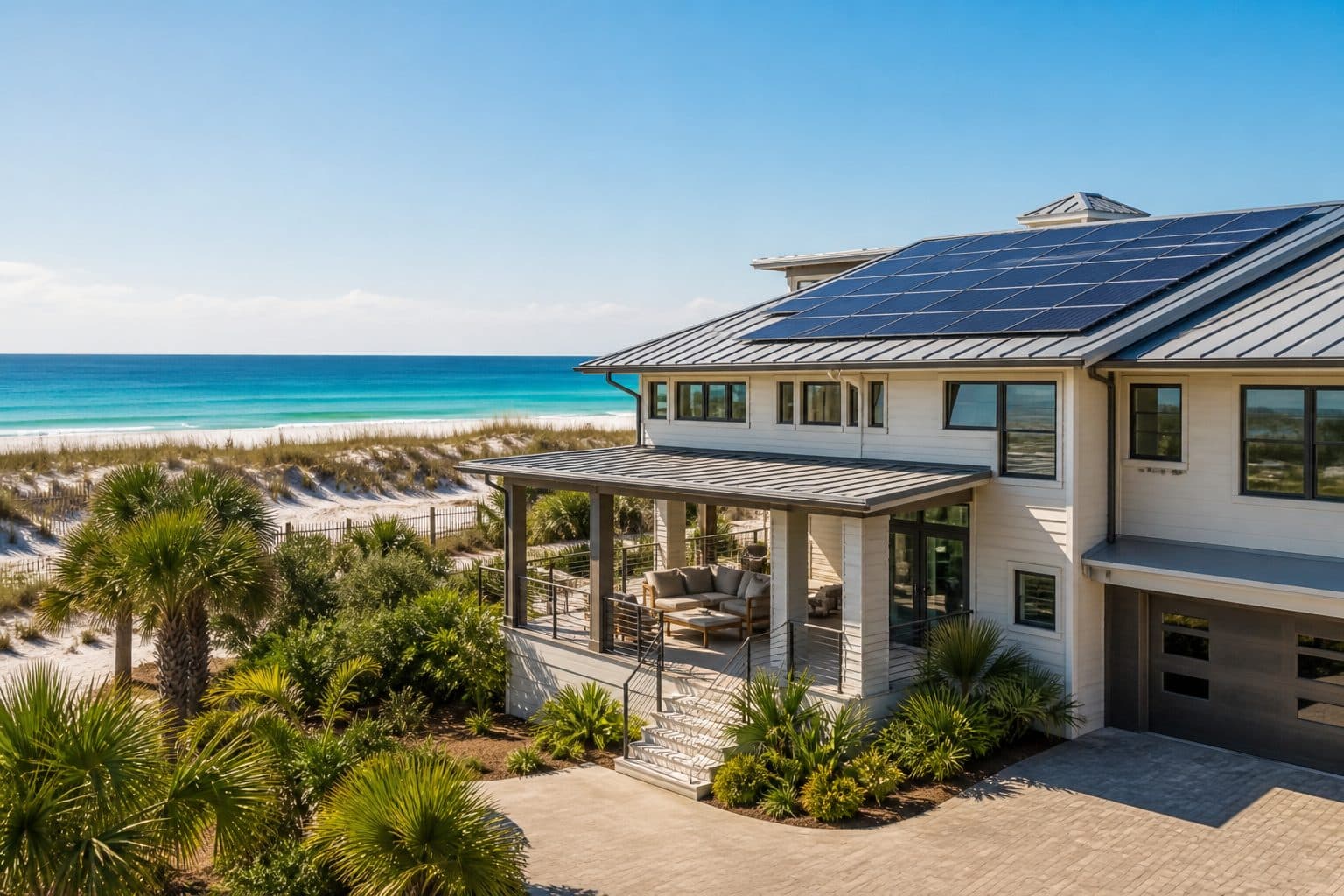
Hurricane season and grid interruptions are part of coastal Florida life. Storage may help keep selected circuits powered, but no battery system can guarantee uninterrupted power in every scenario.
Design realities
Power, capacity, and what shapes runtime
Battery power (kW) is how much electricity the system can deliver at once. Storage capacity (kWh) is how much energy it can hold. Exact backup duration is never promised.
- Battery capacity and the number of batteries installed
- Load size and which circuits are connected
- Solar production during daylight hours of an outage
- Weather conditions and outage length
- Customer usage habits while on backup power
- Maintenance, monitoring, and equipment limitations
Related: Residential Solar · Commercial Solar
FAQs
Battery backup FAQs
Common questions about whole-home backup, runtime, and commercial demand strategies.
Some designs aim for whole-home backup, while others protect selected critical loads. Feasibility depends on battery power output, storage capacity, electrical configuration, and your household’s simultaneous loads.
Runtime depends on battery capacity, load size, number of batteries, solar production during the outage, weather, outage duration, and how you use electricity. Exact backup duration is not promised.
Some commercial projects explore battery storage for peak-demand management and potential demand-charge strategies. Results depend on rate structure, load profile, and system design. Demand-charge reduction is not guaranteed.
Many properties explore solar charging, self-consumption, and generator integration considerations. Compatibility depends on equipment, electrical design, and local code requirements.
Plan with clarity
Request a battery backup consultation
Tell us whether you’re protecting a home, a business, or both—and which loads matter most during an outage.