Hotels
Explore how rooftop solar may help offset high cooling and guest-amenity energy use.
Loading page content
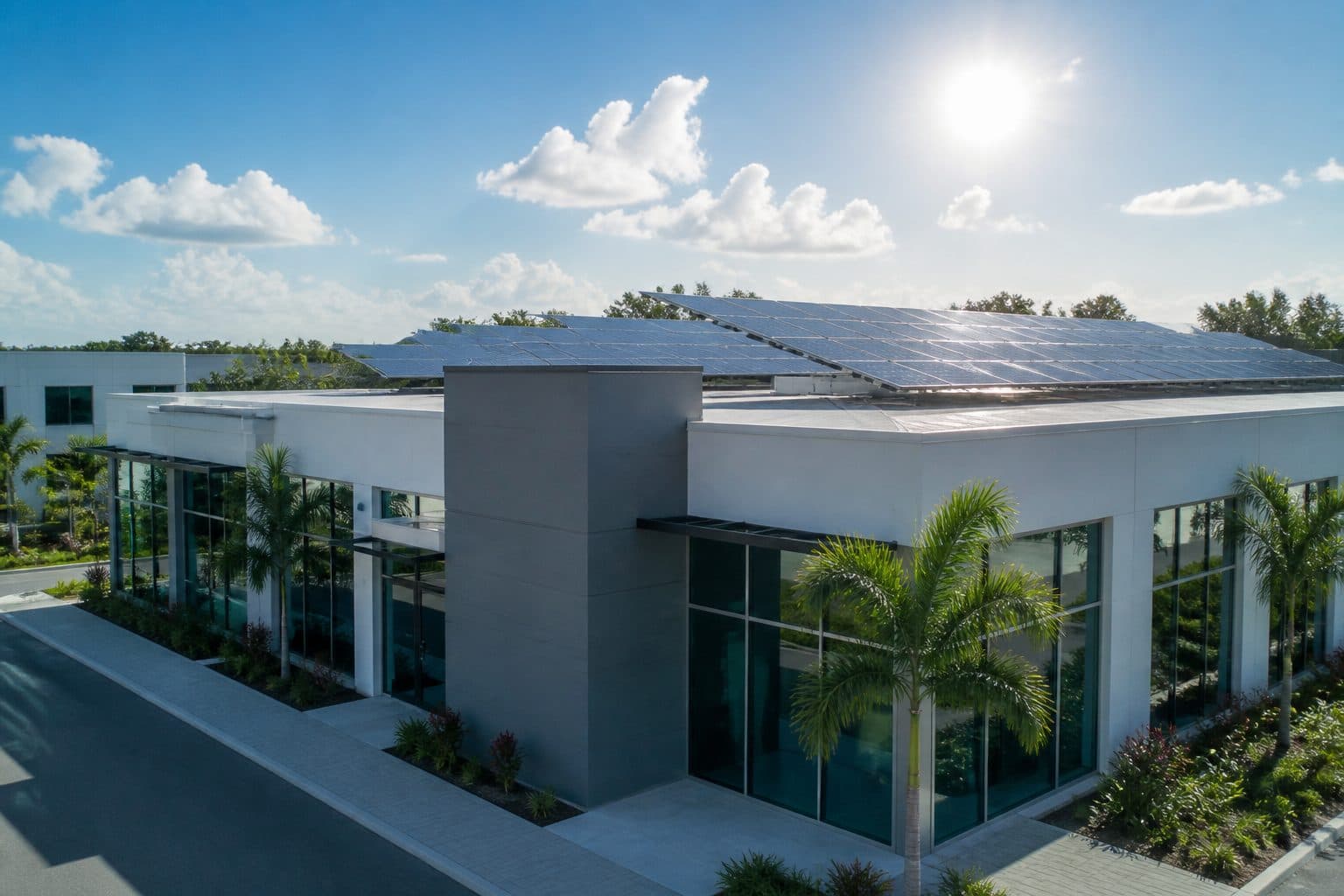
Commercial solar
Reduce operating expenses and explore solar incentives, tax credits, depreciation benefits, grants, battery storage, and financing for projects in Florida and across the United States.
Based in Panama City Beach, Florida. Serving residential solar customers throughout the Southeast and commercial solar customers nationwide.
Nationwide directory
Browse completed commercial state pages and all 50 U.S. states without thin doorway pages.
Project capabilities
Every project is different. Availability, system design, financing, and potential incentives depend on location, ownership, utility rules, and current program guidance.
Review usage patterns, rate structure, and operating costs to frame a project-specific solar conversation.
Explore how demand-related charges may affect the opportunity for solar and storage strategies.
Discuss properties with several meters, campuses, or mixed-use load profiles.
Evaluate rooftop solar where roof condition, structure, and production potential support a commercial array.
Review ground-mount options when land area, setbacks, and site conditions make sense.
Explore canopy and carport concepts that combine parking coverage with energy production potential.
Discuss storage for resilience, self-consumption, or peak-demand management depending on goals.
Review financing concepts that may be available based on ownership, credit, and project structure.
Financially focused
We review operating costs, usage patterns, and system concepts—rooftop, ground-mount, carports, and storage—then discuss financing and potential tax-credit pathways using careful “may qualify” language. Consult qualified tax and legal professionals before relying on any incentive.
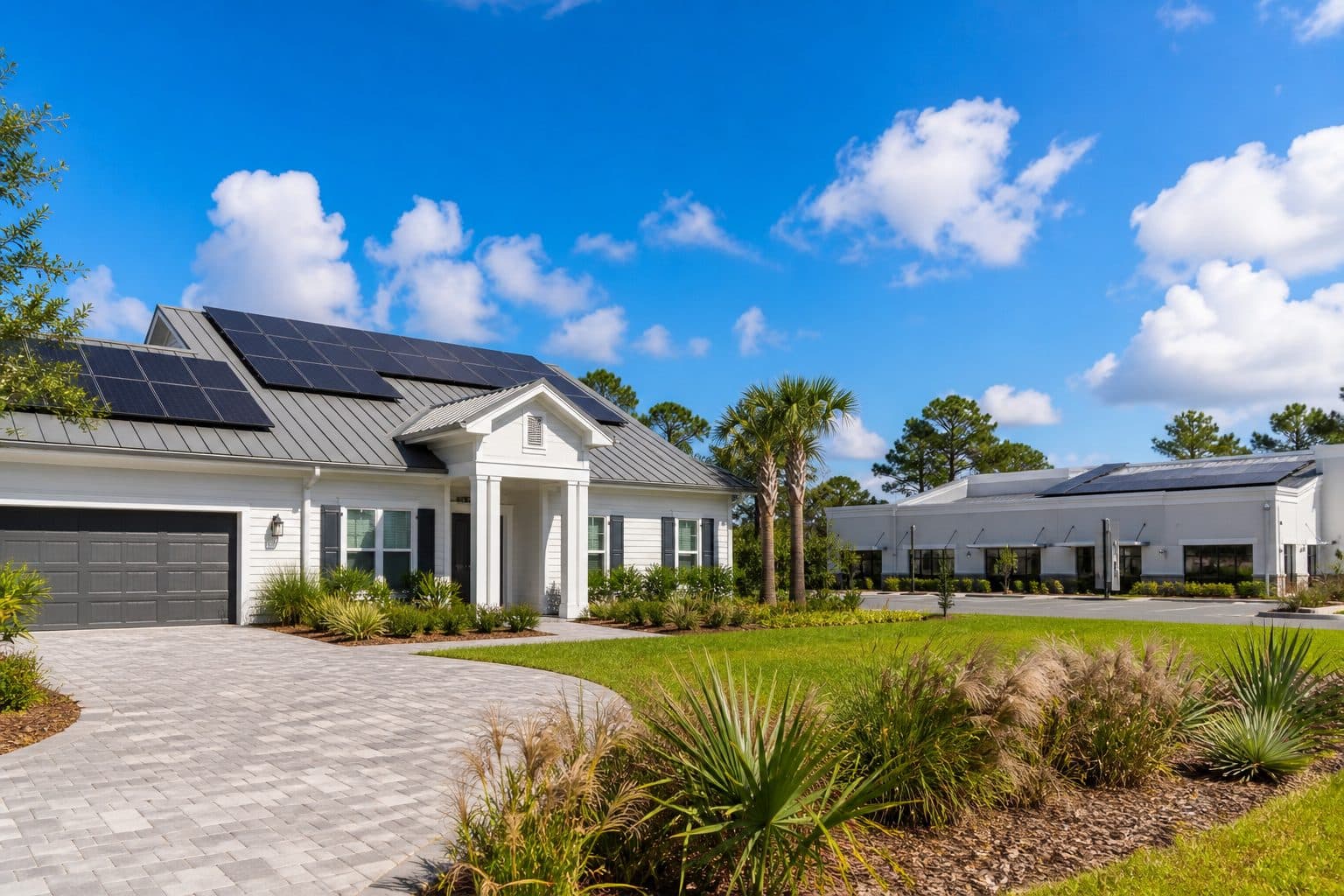
Industries we regularly discuss
Hotels, convenience stores, farms, warehouses, manufacturing, retail, churches, nonprofits, storage facilities, offices, healthcare, automotive businesses, multifamily properties, and more.
Explore how rooftop solar may help offset high cooling and guest-amenity energy use.
Review solar and storage options for high daytime usage and refrigeration loads.
Review solar for barns, irrigation, cold storage, and other agricultural loads.
Large roof areas can be strong candidates for commercial solar production.
Assess solar and storage options when demand charges or long operating hours apply.
Auto shops and service centers can review solar for lighting, tools, and HVAC loads.
Evaluate daytime energy use and potential long-term operating cost stability.
Faith-based facilities can explore solar based on property usage and ownership structure.
Tax-exempt organizations can explore elective-pay / direct-pay pathways where eligible.
Educational campuses can review solar for long-term energy planning and facility loads.
Healthcare facilities can explore solar and backup considerations for critical operations.
Multifamily owners can review rooftop solar, carports, and shared-meter considerations.
Self-storage and warehouse-style facilities can evaluate rooftop solar potential.
Office properties can review solar for predictable weekday energy demand.
Projects may qualify for certain incentives subject to eligibility. Potential benefits depend on current program rules. Nothing here guarantees incentive awards or electric savings.
Timeline & next steps
After you share bill and property details, we outline analysis steps, discussion points, and realistic sequencing. Timelines vary by permitting, utility interconnection, equipment, financing, and site complexity.
Related: Solar Incentives · Battery Backup · Service Areas
Eligible businesses may be able to combine federal tax credits, bonus tax credits, depreciation benefits, grants, and long-term electric savings. Qualification depends on project size, equipment, location, labor requirements, business structure, tax liability, program funding, and current regulations.
30%
Qualifying commercial solar and energy-storage projects may be eligible for a federal tax credit equal to 30% of eligible project costs when applicable requirements are satisfied.
Not every visitor or project automatically qualifies. Final eligibility must be confirmed for each customer and project under current program rules. This is not legal or tax advice.
Many qualifying commercial projects may begin with a 30% federal tax credit. Additional 10% tax-credit bonuses may be available based on American-made equipment, project location, and separate program requirements.
+10%
Additional 10% tax credit
Projects using qualifying American-made steel, iron, and manufactured components may receive an additional federal tax credit equal to 10% of eligible project costs.
Example combination
Our standard commercial equipment package is designed to meet applicable domestic-content requirements. Final eligibility depends on the equipment installed, project documentation, certification, and current federal rules. Domestic Content is not guaranteed for every project.
+10%
Additional 10% tax credit
Projects located in a qualifying Energy Community may receive an additional federal tax credit equal to 10% of eligible project costs.
Eligibility is based primarily on the project’s location and current federal Energy Community designations.
Final eligibility depends on project location, documentation, and current federal designations. Not every location qualifies.
This official federal map can help identify whether the project address is located in a designated Energy Community. Final tax-credit eligibility must still be verified.
+10%
Additional 10% tax credit
Certain projects under 5 MW located in a qualifying low-income community may receive an additional federal tax credit equal to 10% of eligible project costs after receiving the required program allocation.
This bonus requires a separate application and allocation. Location alone does not guarantee qualification.
This map can help identify potentially qualifying census tracts. The Low-Income Communities Bonus also requires a separate application and allocation.
When added to a 30% federal tax credit, an additional 10% bonus can increase the total federal tax credit to 40% of eligible project costs.
Bonus tax credits have separate eligibility and documentation requirements. Not every project will qualify for every bonus.
Eligible agricultural producers and rural small businesses may qualify for competitive USDA Rural Energy for America Program funding for renewable-energy projects.
REAP awards depend on eligibility, application quality, available funding, and USDA program rules at the time of application.
Use the USDA Rural Business property eligibility tool to review whether the project location may qualify as rural. Map eligibility alone does not guarantee REAP eligibility or funding.
Qualified commercial solar and energy-storage property may be eligible for accelerated cost recovery through five-year MACRS depreciation.
Depreciation reduces taxable income rather than providing a dollar-for-dollar tax credit. The actual cash value depends on the owner’s tax situation and should be reviewed by a CPA or qualified tax professional.
Review this educational resource from the Solar Energy Industries Association for an overview of MACRS and depreciation treatment for qualifying solar property. Final tax treatment should be reviewed with a qualified CPA or tax professional.
Some commercial solar owners may be able to transfer eligible federal clean-energy tax credits to an unrelated taxpayer in exchange for cash. This can provide an alternative for businesses that cannot fully use the credit themselves.
The business completes an eligible commercial solar project
The project owner determines the available federal tax credit
An eligible third party purchases the transferable credit for cash
The business applies the cash proceeds according to its project and financing strategy
The tax credit is not automatically paid at full face value. Transfer pricing is negotiated between the seller and buyer.
The project owner remains responsible for eligibility, documentation, registration, filing, recapture exposure, and compliance with federal requirements unless otherwise addressed by contract. Federal tax credits may be subject to recapture. Spence Solar and Construction does not purchase tax credits or provide tax or legal advice.
Concise answers with careful language—and official government resources so you can verify incentive details for yourself.
Qualifying commercial solar and energy-storage projects may receive a federal clean-energy investment tax credit based on eligible project costs. Many qualifying projects may receive a 30% credit when applicable requirements are satisfied. Additional bonus tax credits may also be available.
Eligibility depends on current law and project-specific facts. Tax credits are not guaranteed and should be reviewed with a qualified CPA or tax professional. Spence Solar and Construction does not provide tax, accounting, or legal advice.
Official Resources
Yes. Some qualifying projects may receive additional federal tax-credit bonuses, including the Domestic Content Bonus, Energy Community Bonus, and certain Low-Income Communities Bonus allocations. Each bonus has separate eligibility, documentation, location, equipment, or application requirements.
Not every project will qualify for every bonus. Final eligibility depends on current federal rules and project-specific verification.
Qualifying projects that meet applicable American-made steel, iron, and manufactured-product requirements may receive an additional 10% federal tax credit. Final eligibility depends on the installed equipment, cost calculations, certifications, documentation, and current federal rules.
Official Resources
Certain project locations may qualify as federal Energy Communities based on current statutory categories and federal designations. A qualifying location may provide an additional 10% federal tax credit, subject to final verification.
Official Resources
This official federal map can help identify whether the project address is located in a designated Energy Community. Final tax-credit eligibility must still be verified.
Certain qualifying projects under 5 MW may apply for an additional federal tax credit through the Low-Income Communities Bonus Credit Program. The program requires a separate application and allocation. Being located in a qualifying area does not automatically award the bonus.
Official Resources
This map can help identify potentially qualifying census tracts. The Low-Income Communities Bonus also requires a separate application and allocation.
Certain eligible taxpayers may elect to transfer some or all of an eligible federal clean-energy tax credit to an unrelated taxpayer for cash. This is commonly described as transferring or selling the tax credit. The transaction must follow IRS registration, filing, documentation, payment, and eligibility requirements.
The purchasing taxpayer generally pays cash for the transferred credit. The cash payment is not included in the seller’s gross income, and the buyer generally cannot deduct the payment, subject to applicable federal rules.
Tax-credit transfer pricing, eligibility, recapture risk, documentation, registration, and tax treatment should be reviewed with qualified tax and legal professionals. Spence Solar and Construction does not purchase tax credits or provide tax or legal advice unless separately disclosed in writing.
Official Resources
Eligible agricultural producers and rural small businesses may qualify to apply for competitive USDA REAP funding. Location, rural eligibility, business type, and current USDA rules all matter. Not every Florida business will qualify.
Use the USDA Rural Business property eligibility tool to review whether the project location may qualify as rural. Map eligibility alone does not guarantee REAP eligibility or funding.
No. REAP funding is competitive and not guaranteed. Award decisions depend on eligibility, application quality, available funding, and USDA program rules at the time of application.
Qualified commercial solar and energy-storage property may be eligible for accelerated cost recovery through five-year MACRS depreciation. Certain eligible property may also qualify for bonus depreciation under current tax rules. A CPA should review your situation.
Review this educational resource from the Solar Energy Industries Association for an overview of MACRS and depreciation treatment for qualifying solar property. Final tax treatment should be reviewed with a qualified CPA or tax professional.
A tax credit may reduce tax liability dollar-for-dollar when eligible. Depreciation generally reduces taxable income over time. The cash value of each depends on the owner’s tax situation and should be reviewed with a qualified tax professional.
Yes. An eligible business may combine a USDA REAP Grant with applicable federal solar tax credits and depreciation benefits.
Each incentive has its own eligibility, documentation, timing, tax-treatment, and application requirements. The REAP Grant is competitive and must be separately approved by USDA, while federal tax credits and depreciation depend on the completed project, ownership structure, eligible costs, current tax law, and the customer’s tax circumstances.
The customer should have a qualified CPA or tax professional review how the REAP Grant affects tax-credit basis, depreciation basis, and the final financial treatment of the project.
Receiving one incentive does not automatically guarantee eligibility for another, but qualifying projects may use multiple incentives together.
Yes. Eligible tax-exempt nonprofit organizations may use elective pay, commonly called direct pay, to receive the value of qualifying federal clean-energy tax credits directly from the IRS.
Under elective pay, the nonprofit calculates the eligible federal tax credit and makes an elective-payment election on its federal filing. The IRS treats the elected credit amount as a payment of federal income tax. Because many nonprofits have little or no federal income-tax liability, the resulting overpayment may be refunded to the organization.
For example, if an eligible nonprofit completes a qualifying solar project with $100,000 of eligible project costs and qualifies for a total 50% federal clean-energy tax credit, the potential elective-payment amount would be $50,000, subject to final eligibility, eligible-cost calculations, registration, filing, documentation, domestic-content rules, bonus-credit requirements, and current federal law.
The nonprofit does not need to sell the credit to another taxpayer in order to use elective pay. Elective pay is different from tax-credit transferability.
Project Example
This example is for illustration only. The actual credit amount depends on eligible project costs, applicable labor requirements, domestic content, project location, bonus-credit allocations, tax-exempt use rules, grant interactions, filing requirements, and current law.
How Direct Pay Works
Elective pay allows an eligible nonprofit or other applicable entity to claim qualifying credits as a payment against federal tax and potentially receive a refund. Transferability generally allows an eligible taxable business to sell certain credits to an unrelated taxpayer for cash.
Official Resources
Helpful details include business type, project ZIP code, ownership status, recent electric bills, whether demand charges apply, rural or agricultural status, interest in solar and/or storage, and basic project goals. Sensitive tax returns are not required on the website form.
Official IRS and U.S. Treasury pages are linked for educational research only. They do not constitute an endorsement of Spence Solar and Construction, and they do not guarantee tax-credit, bonus, grant, or transfer eligibility.
Nationwide commercial
Tell us about your property and electric usage. Upload or select a bill in the form when ready—then we’ll follow up with a project-specific consultation.